News
We don’t expect success, we work for it. Become a part of an amazing team!
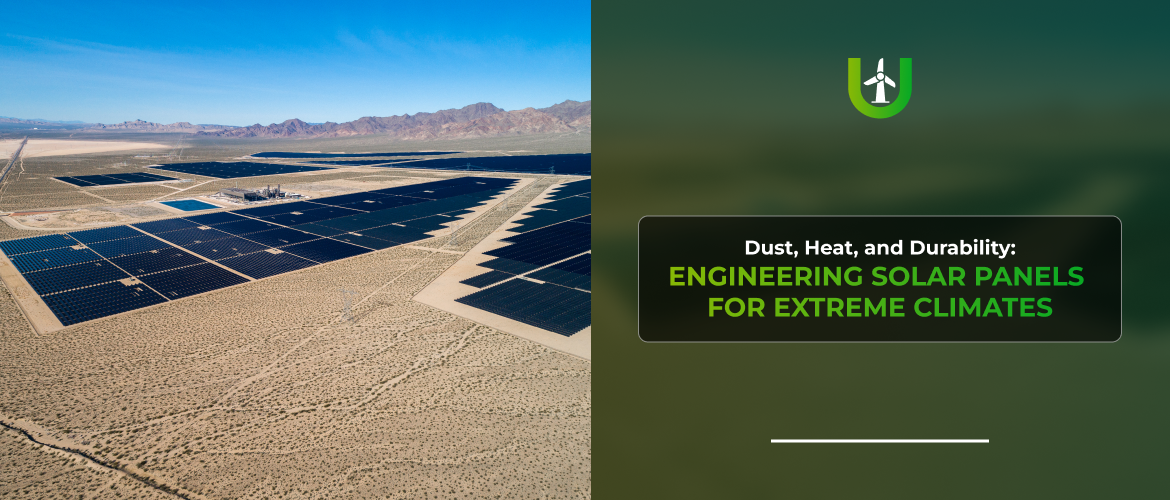
Dust, Heat, and Durability: Engineering Solar Panels for Extreme Climates
As solar energy continues to expand into some of the world’s harshest environments, from the Sahara to Southeast Asia, engineers and materials scientists are confronting a difficult challenge: how to keep solar panels efficient and durable under extreme heat, heavy dust, and high humidity.
The Harsh Reality of Extreme Climates
Solar panels perform best around 25°C (77°F). In hot desert regions, panel surfaces can reach 60–70°C, reducing energy conversion efficiency by roughly 0.4–0.5% per °C above 25°C. Dust, sand, and salt in the air can accumulate on panels, decreasing sunlight exposure and energy output. In humid climates, moisture can accelerate corrosion of metallic components and degradation of encapsulants, affecting long-term performance.
These factors directly impact the efficiency, reliability, and economic viability of solar installations in extreme environments.
Material and Design Solutions
To improve the reliability and performance of solar modules in diverse environments, engineers optimize both materials and design. Using advanced encapsulants, protective coatings, and thermally efficient structures, modern photovoltaic systems can better resist heat, dust, humidity, and other stressors. The following strategies highlight key innovations that enhance durability and efficiency.
1. Thermal-Resistant Materials
Encapsulants and backsheets made from fluoropolymers and cross-linked polyolefins provide greater resistance to heat and mechanical stress than conventional materials. This improves long-term optical clarity and preserves the panel’s structural integrity.
2. Dust Mitigation
Dust accumulation can reduce output by 5–30% depending on conditions. While coatings that repel water or dust exist in research, regular cleaning and maintenance remain the most reliable approach for large-scale installations.
3. Humidity and Corrosion Protection
In moist climates, corrosion-resistant interconnects and moisture-resistant encapsulants help prevent performance loss. Some research focuses on materials that resist microbial growth, but this is not yet standard practice in commercial panels.
4. Passive Cooling and Design
Design improvements, such as airflow channels behind panels or radiative cooling coatings, can help reduce module temperature, improving efficiency and lifespan. Thin-film technologies, like CdTe, are less sensitive to high temperatures compared to crystalline silicon panels and can perform better in very hot regions.
Emerging Technologies and Field Testing
Real-world testing is essential to ensure reliability under extreme conditions. Research facilities monitor panel performance across variations in temperature, dust, and humidity.
Innovations under investigation include:
- Bifacial modules that capture sunlight from both sides.
- Thin-film CdTe panels optimized for high temperatures.
- High-temperature-tolerant interconnects that maintain electrical reliability in harsh climates.
Utilities One: Supporting Renewable Growth
At Utilities One Renewable, we believe that through continued innovation, collaboration, and support for renewable energy development, these environmental and technical challenges can be overcome. Ensuring that solar systems perform consistently and sustainably is vital for building resilient energy infrastructure, reducing dependence on fossil fuels, and supporting long-term environmental goals. By championing sustainable infrastructure and clean energy advancement, we hope to contribute to a future where solar power thrives across all conditions.
Share Via:
Related Posts


27 March, 2026
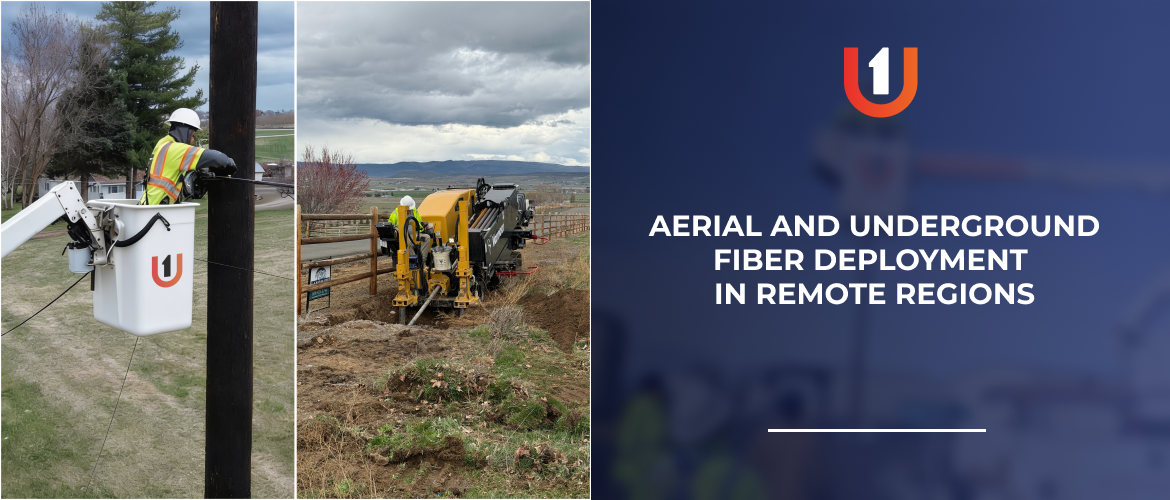
Aerial and Underground Fiber Deployment in Remote Regions
Remote network expansion requires precise execution across distance, terrain, and infrastructure limitations. This article outlines how aerial and underground fiber deployment are combined into a coordinated approach to ensure continuity, control, and reliable performance in challenging environments.
300 W Somerdale Rd, Suite 5E, Voorhees Township, NJ 08043
COPYRIGHT © 2026 UTILITIES ONE